

Ringed Plover context in Cumbria
As a result of recent opportunities to study Ringed Plover locally, I’ve had some thoughts on the tundra-types seen at Bowness Railings. For context the official Cumbria bird list collated by Cumbria Bird Club describes two subspecies of Ringed Plover as occurring in the county. These are the nominate subspecies Charadrius hiaticula hiaticula and one of the tundra subspecies Charadrius hiaticula psammodromus.. I can only assume that psammodromus records refer to birds identified through ringing research as they can be very difficult to identify confidently in the field. This is because they vary in appearance and some can be quite impossible to separate from the nominate form hiaticula.
Taxonomy, briefly…
It seems that some modern avian taxonomist do not think that psammodromus is a valid taxon. They treat all tundra-types as Charadrius hiaticula tundrae. For the purpose of this post, I will refer to tundra-types as Tundra Ringed Plover or tundrae.
The Hiaticula subspecies breeds in northeastern Arctic Canada, Greenland, Iceland, Spitsbergen, and southern Scandinavia southward to France; primarily winters in western Africa. British birds tend to overwinter as far as I’m aware. (Opus). Tundra Ringed Plover breeds in Arctic Ocean coasts from northern Scandinavia to the Chukotskiy Peninsula and St. Lawrence Island (northern Bering Sea; erratic); They winter in southern Europe, Africa, and southwestern Asia (Opus)
It is worth noting that the tundrae/psammodromus Ringed Plovers form a clade, which means they can vary in appearance from being very similar to a typical hiaticula bird (as they integrate) to fitting most features of a tundrae/psammodromus bird. So, yes, it’s complicated!
The Solway birds…
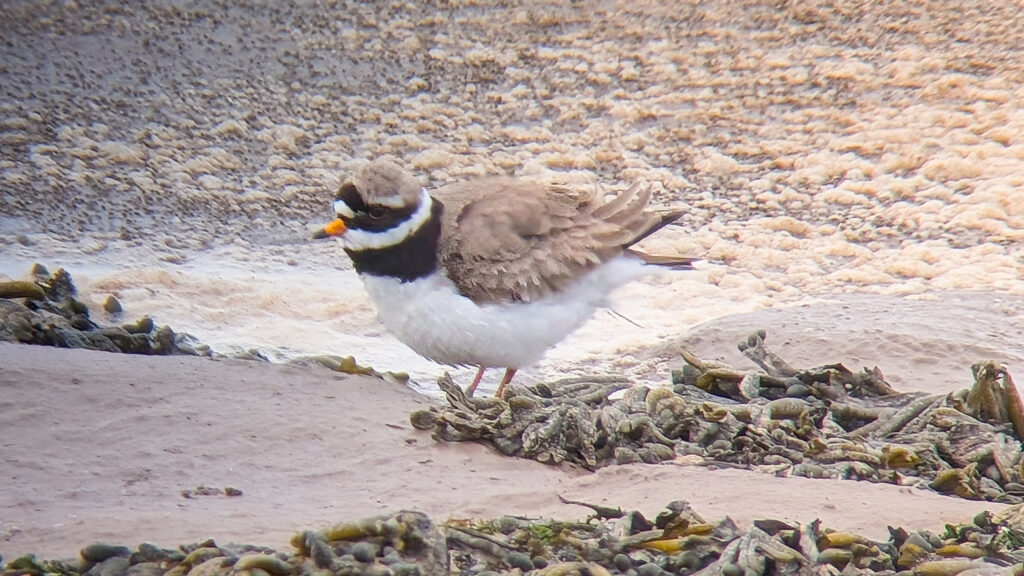
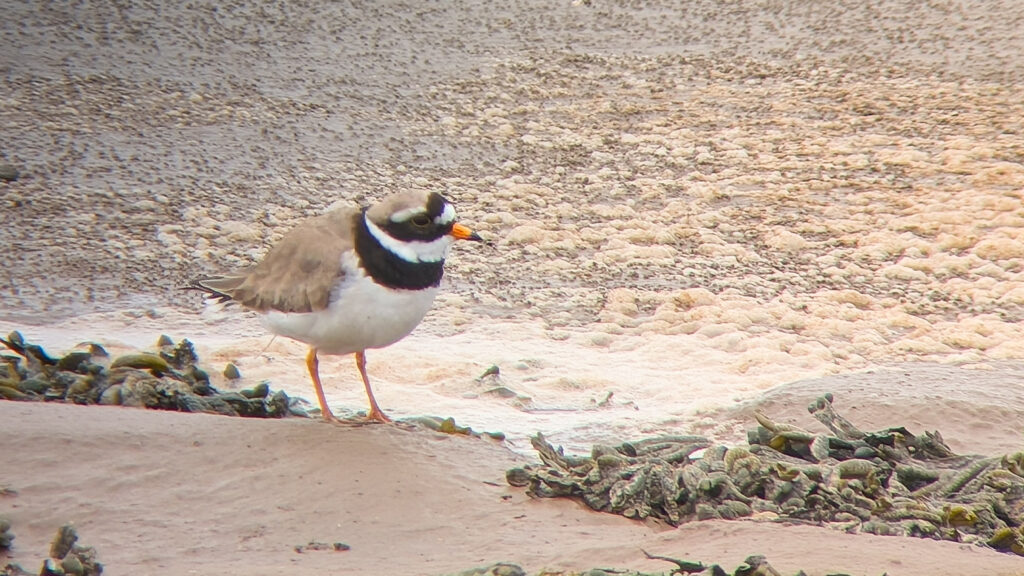
These Common Ringed Plovers (hiaticula) were photographed at Grune Point where they were nesting. Pictures were taken at a safe distance to ensure the birds were not disturbed.
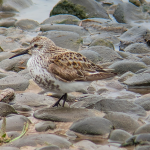
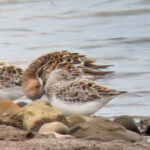
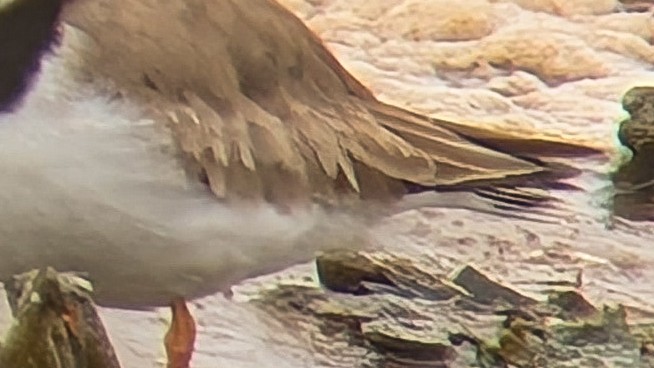
You can see by the images (above) that this pale brown, black and white shorebird is quite dumpy in structure and has a relatively stout orange and black bill. The dark breast band is quite thick, but not wholly even. The whitish supercilium is relatively long and thick. The birds movement was quite laboured, but deliberate. Probably the most significant feature noted was the worn primaries. hiaticula moult on the breeding grounds whilst tundrae/psammodromus moult on their wintering grounds. As you can see from the cropped image below, this hiaticula Common Ringed Plover has very worn flight feathers.
Candidate Tundra Ringed Plovers
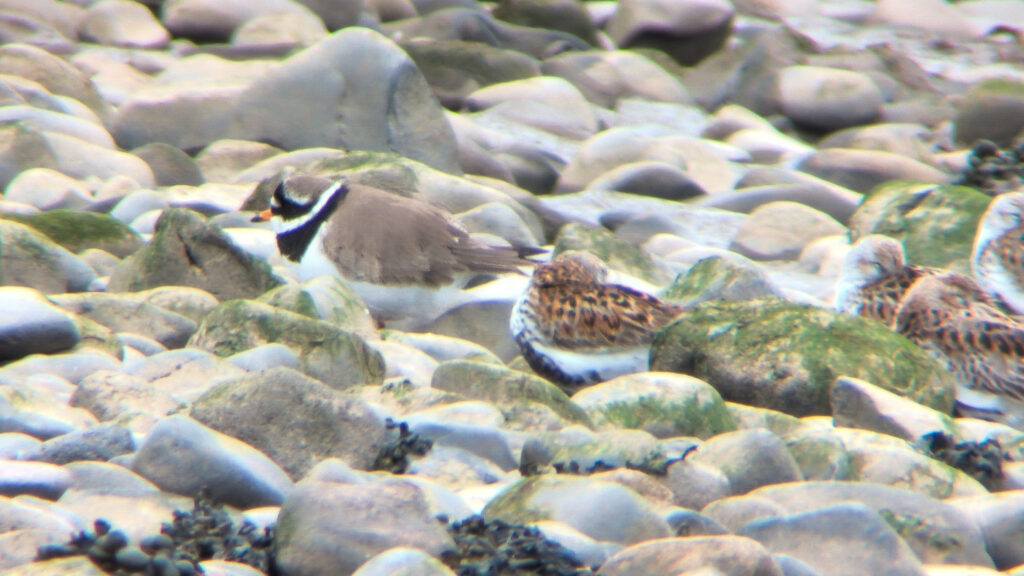
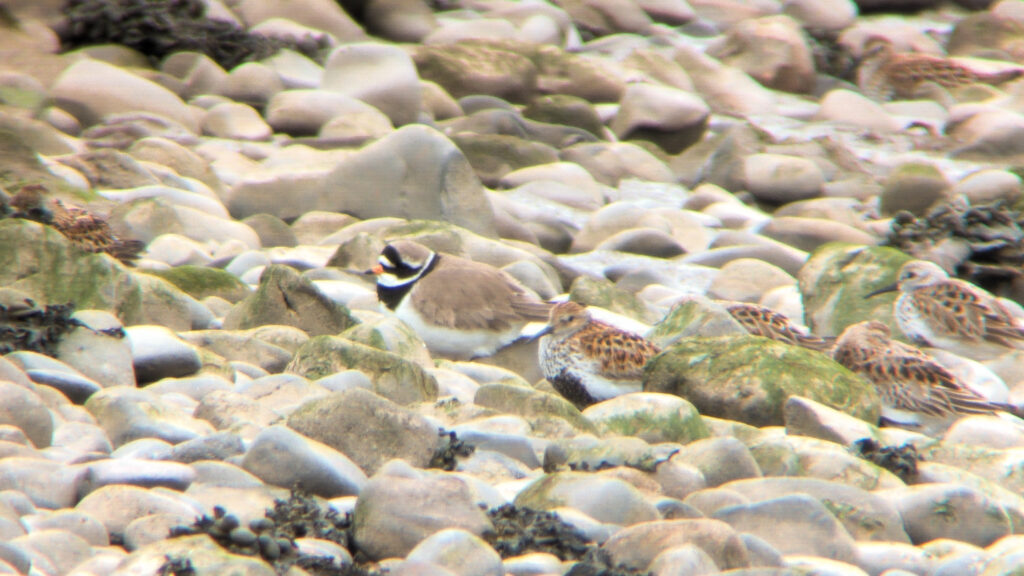
I found this candidate Tundra Ringed Plover (above) quite subtly striking. Overall built is smaller and slimmer than the hiaticula Ringed Plovers that I’d observed previously. The upper-parts appeared to be a shade darker too. Movement was significantly faster, more reminiscent of how a Dunlin moves. The bill was more petite and the breast band was perhaps a little slimmer and neater.The supercilium, although present, appeared to be thinner and shorter than those found on hiaticula birds. As can be seen in the image below, the flight feathers were very fresh and not showing any real wear.
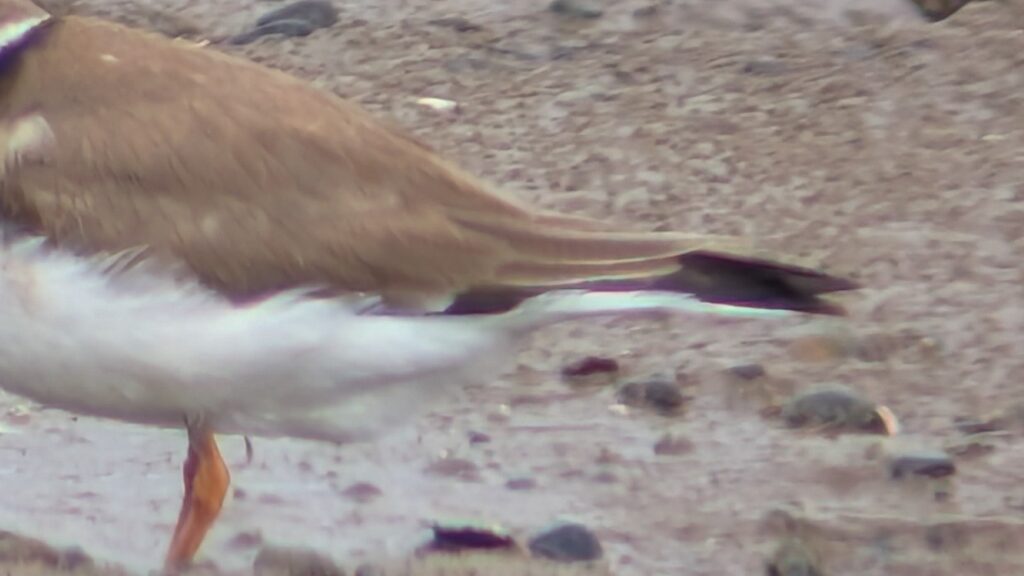
Based on the noted differences and particularly the different states of moult shown, I am fairly convinced that the recent birds observed are likely Tundra Ringed Plover candidates. Whether they are tundrae or psammodromus, well I’ll leave that to the experts!
Further reading:
https://pembsbirds.blogspot.com/2012/03/tundra-ringed-plover.html