
Recent birding visits have given me an opportunity to study Ringed Plovers a little. At this time of year we have the local nominate form Charadrius hiaticula hiaticula , nesting along mostly coastal locations. These are joined by Charadrius hiaticula psammodromus and Charadrius hiaticula tundrae, during spring and autumn passage. The psammodromus Ringed Plover subspecies is a difficult form to assess as they are clinal in appearance and can sometimes be almost indistinguishable from either of the other two subspecies. In fact many modern taxonomists do not consider psammodromus a valid taxon at all. It is interesting however that only hiaticula and psammodromus have officially been recorded in Cumbria (according to the Cumbria Bird Club bird list). I assume the latter subspecies records probably come from ringing recoveries. For the purposes of this post I will refer to nominate Ringed Plover and Tundra Ringed Plover, with the caveat the tundra birds could be tundrae or psammodromus. or intergrades.
Hiaticula (nominate subspecies) breed in France, Britain and Ireland, southern Scandinavia, Spitsbergen, Iceland, Greenland and northeastern arctic Canada. They winter predominantly in western Africa, though can be resident in some regions. Whilst Tundra Ringed Plovers breed on Lawrence Island, and from the Chutoskiy Peninsula to northern Scandinavia. They winter in southern Europe, Africa and southwestern Asia.
On a recent trip to Grune Point I was privileged to be able to photograph (at a suitable distance) some local breeding hiaticula Ringed Plovers.
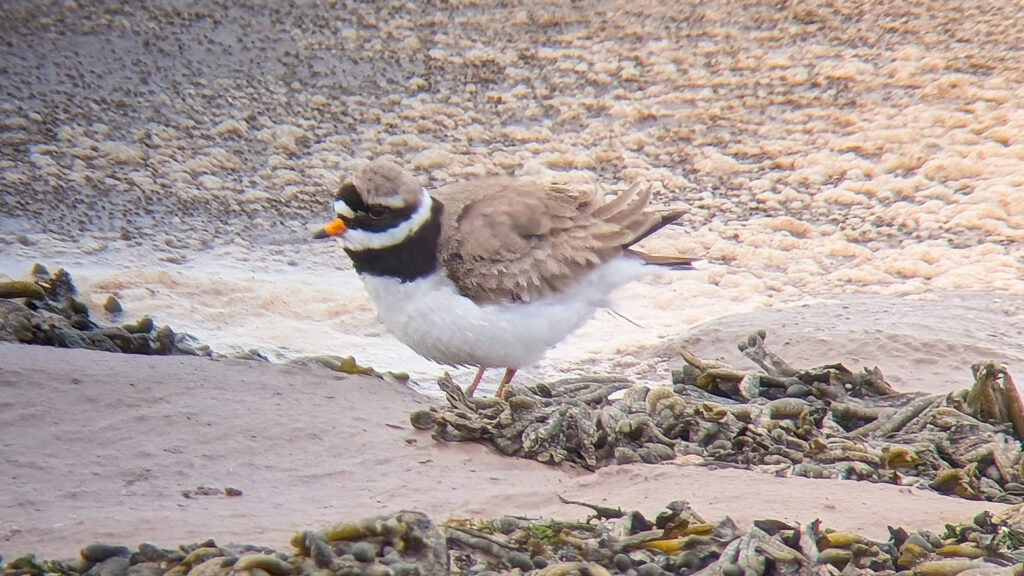
Note the chunky appearance, thick breast band and collar, prominent white supercilium, strong bill, pale brown upperparts and worn primaries. This bird had a relatively purposeful quite languid walk. This, as expected, fits all the criteria for a safe hiaticula identification.
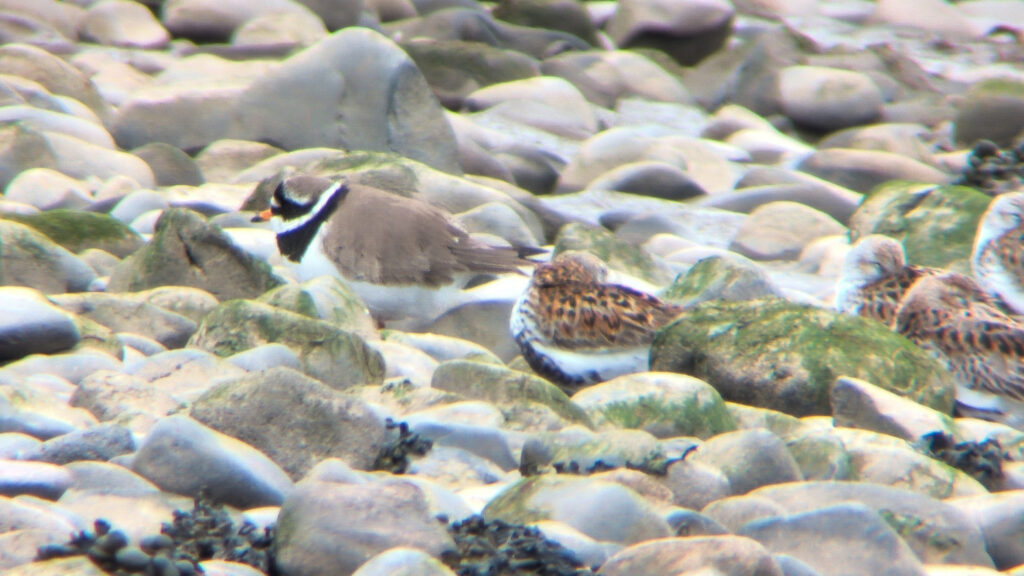
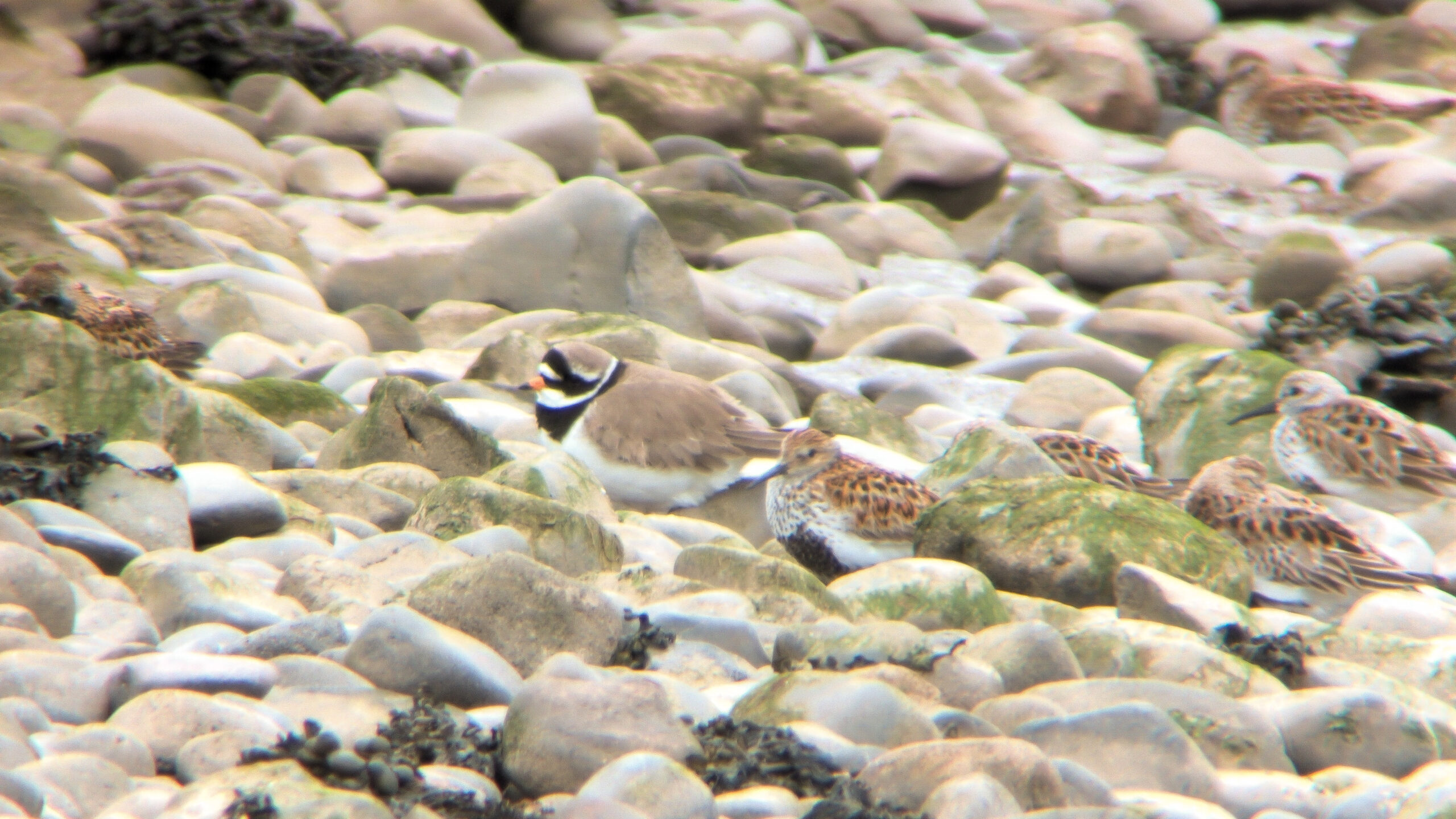
This Ringed Plover was one of twelve accompanied by twenty Dunlin or so. The most striking feature of this bird that suggested it was a Tundra Ringed Plover was its slighter build and darker brown upperparts. The movement of this individual was also very urgent, it reminded me of a wind-up toy. Other differences from the recently observed hiaticula Ringed Plover was a narrower breast band/neck collar, less well defined supercilium (shorter), smaller, slighter bill and fresher primaries. All these observations make this bird a very good contender for Tundra Ringed Plover. Psammodromus or tundrae? I think I’ll leave that one to the experts!